
The Bumblebee Catkin Fly could indeed be mistaken for a bumblebee, especially from a distance, which is how they’re most often spotted. Brachypalpus alopex has rich, coppery orange fuzz, or pile in science-speak, on its thorax. That color is the inspiration for the species name: Alopex means ‘fox.’
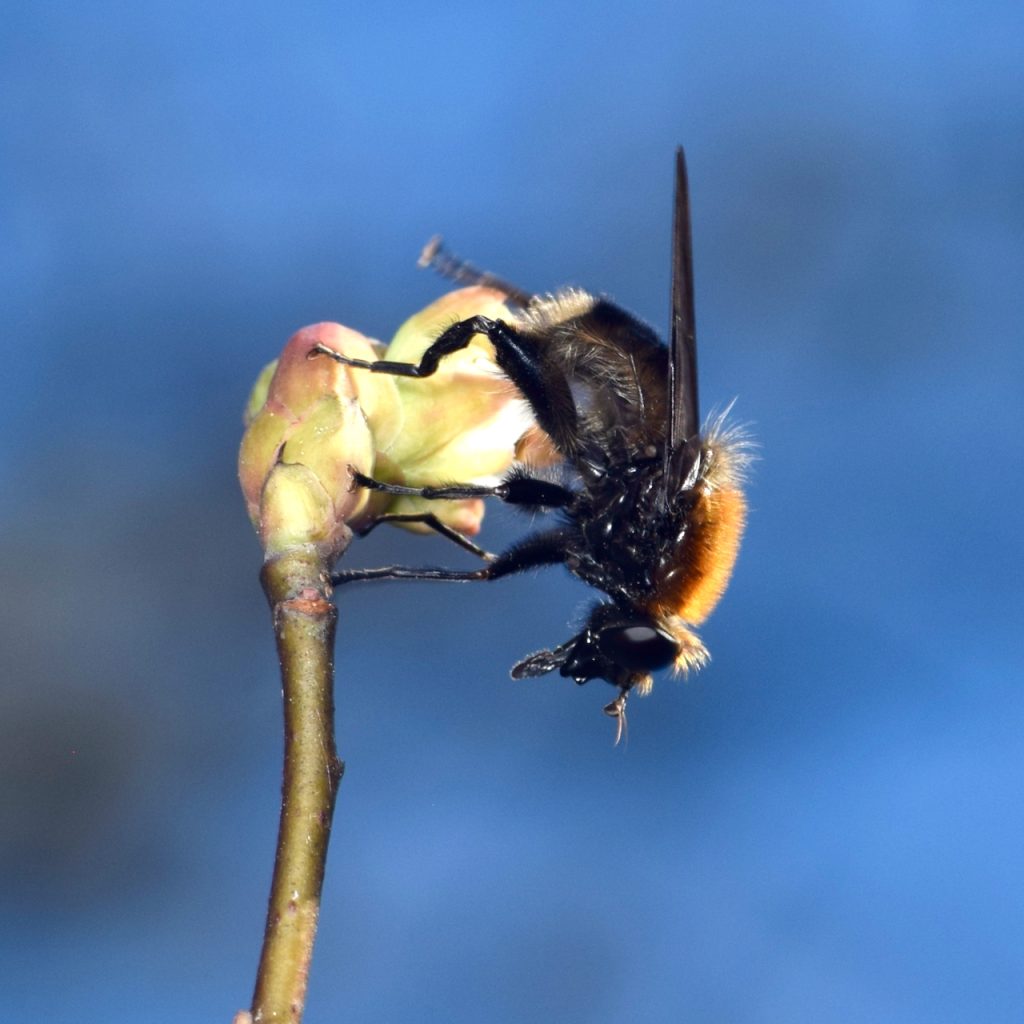
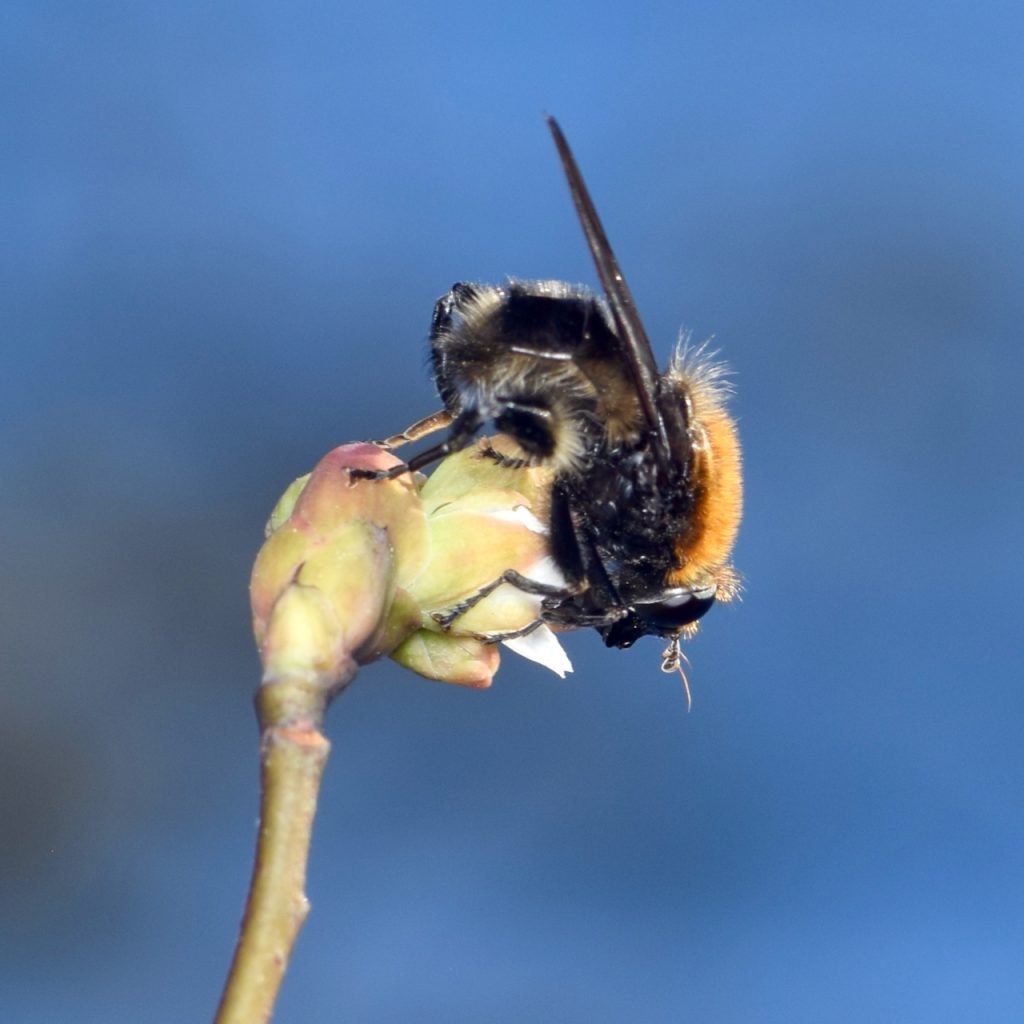
Adults eat nectar and are therefore pollinators. Larvae eat decaying plant matter, and therefore live in dead and dying trees. They have an unfortunate but accurately descriptive name: rat-tailed larvae.
I’ve seen this flashy fly several times at Mount Pisgah. It’s often among the first insects feeding on one of the first flowering plants at the park: Osoberry, or Indian Plum. But because it’s fast moving and often in high branches, it’s a challenge to get a photo. Maybe that’s one of the reasons it appears to be a rare find?
Wikipedia lists the species as “uncommon,” and it has only 183 observations on iNaturalist as of early February, 2026. Compare that to another flower fly, the White-bowed Smoothwing, a smaller fly which has only a slightly larger geographic range and a few more months of adulthood, but has 5,281 observations, or more than 28 times more than B. alopex.
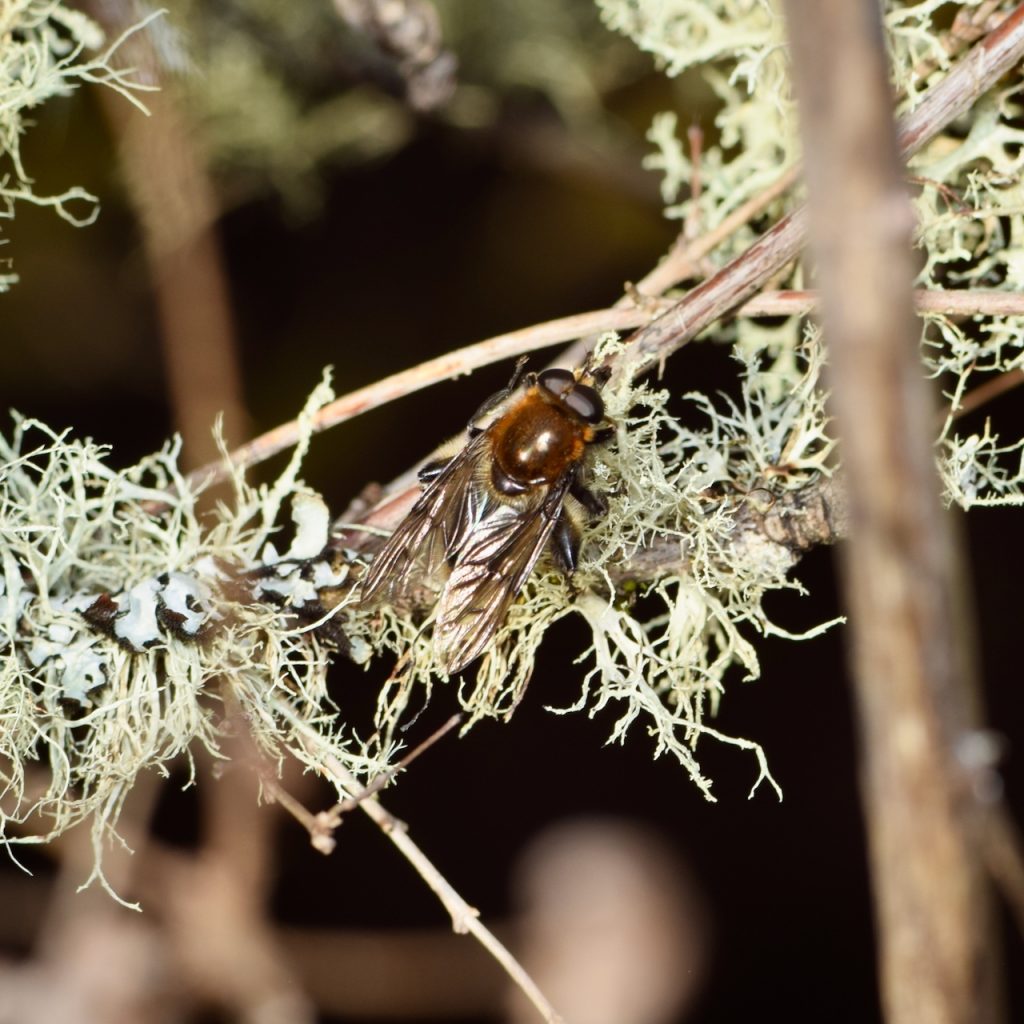
The Bumblebee Catkin Fly is on the wing in the first few months of the year, with peak numbers of them seen in March. We had an early bloom this year, so prime time may end sooner, but keep your eyes open for the rusty, foxy glint of this fly the next time you’re admiring the early blossoms.
Stay curious!
See more of Karen’s work here.
Sources:
Website describing another western U.S. species in the genus: https://explorer.natureserve.org/Taxon/ELEMENT_GLOBAL.2.950287/Brachypalpus_femoratus. Accessed 2/4/26.
iNaturalist records for the species: https://www.inaturalist.org/observations?taxon_id=871285. Accessed 2/4/26
All photos by Karen Richards.