
Heads up to those with grammaphobia: The subject of this column will take us through quite the alphabet soup.
The typical coloring of the Painted Lady Beetle, Mulsantina picta, is pink and red, in wavy, M or W shaped patterns on the hardened outer wings, or elytra. It has orange legs, and the segment behind its head, the pronotum, has a white background, with ink-like drops of black which also form an M shape, when viewed from above with the head up.
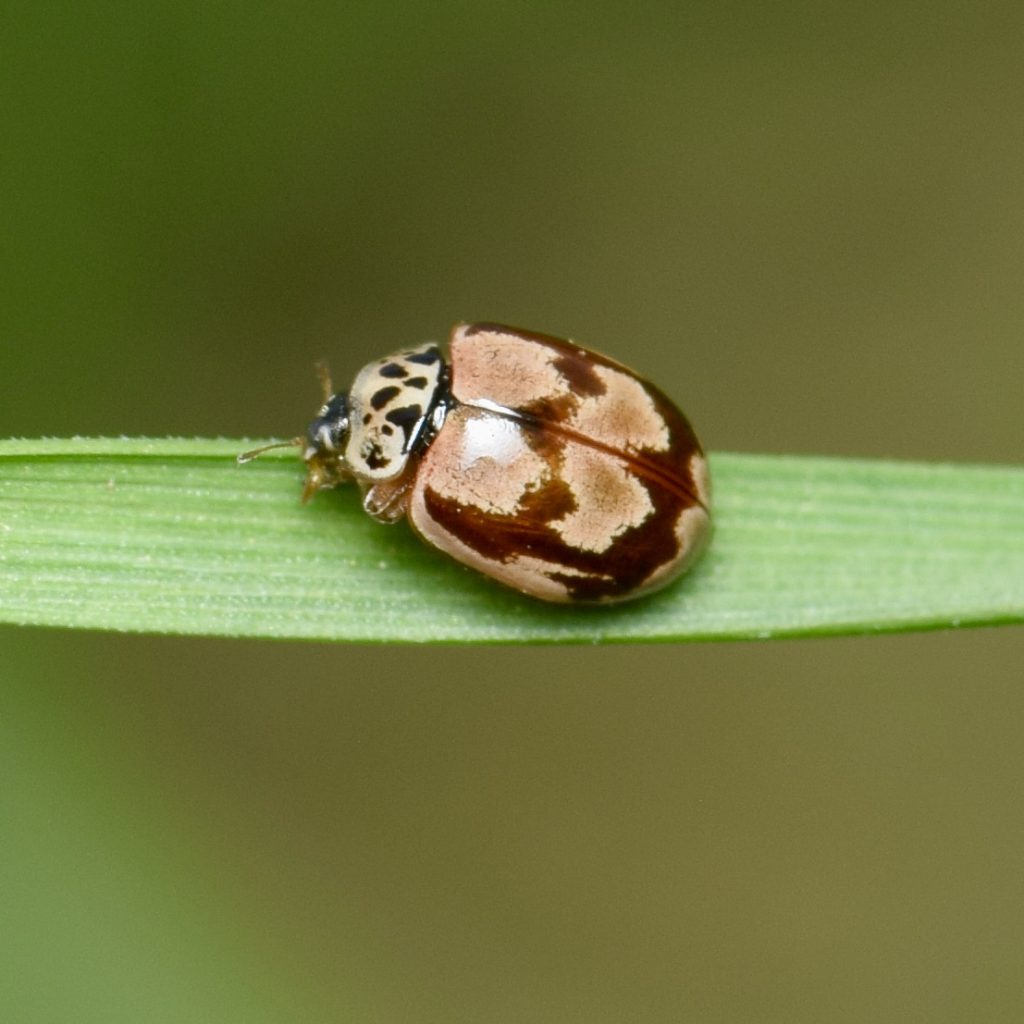
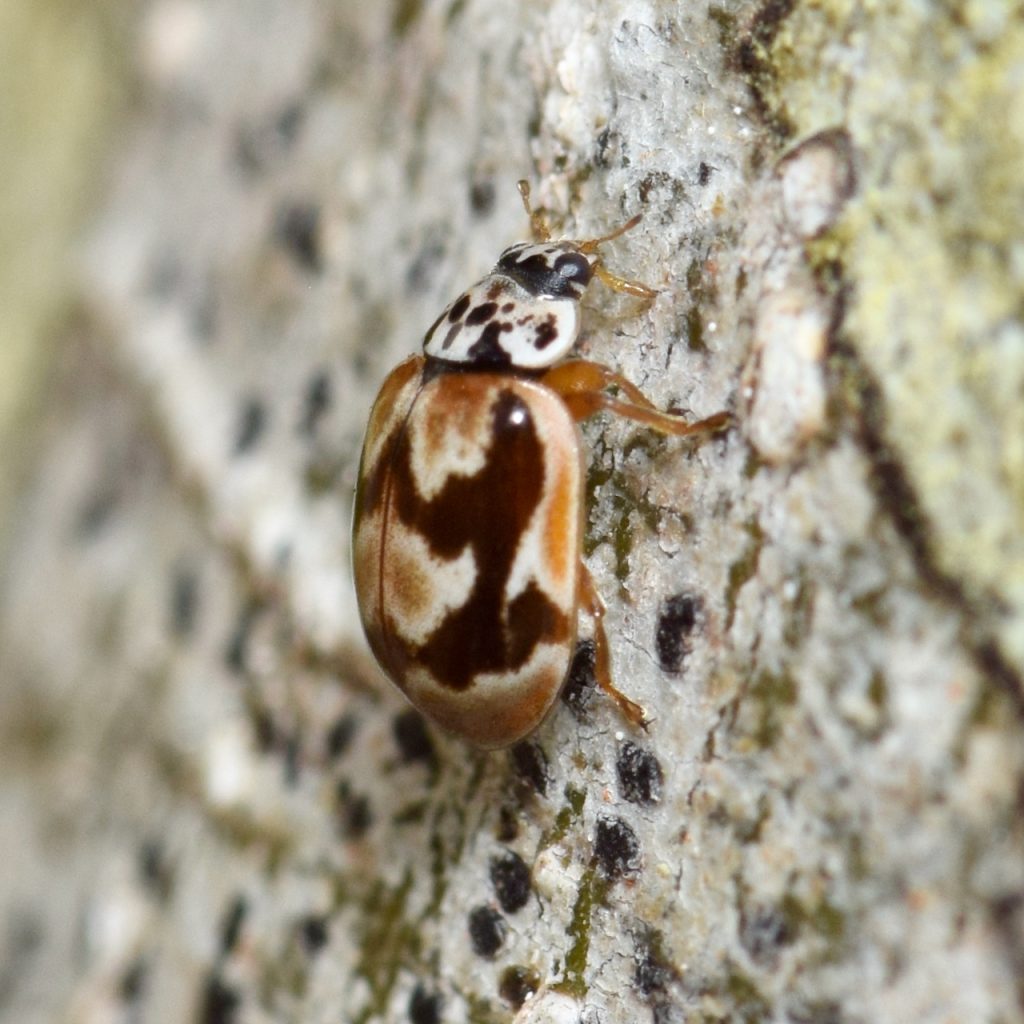
However, both the elytra and pronotum patterns can vary wildly. A couple of the individuals pictured here don’t have a distinct M on the pronotum, and they all have slightly different colored elytra. Some online photos show Painted Lady Beetles with nearly solid hues on the wing covers.
That’s why, in some cases, you may need to resort to a belly check.
The easiest way to be sure you have an M. picta is to (respectfully) flip it upside down. The underside of the beetle has a distinctive T and X pattern, one above the other, in yellow on black, down the center of the insect’s abdomen. Unfortunately, I didn’t know this until after these photos were taken, so you’ll have to refer to the BugGuide page below to see examples.
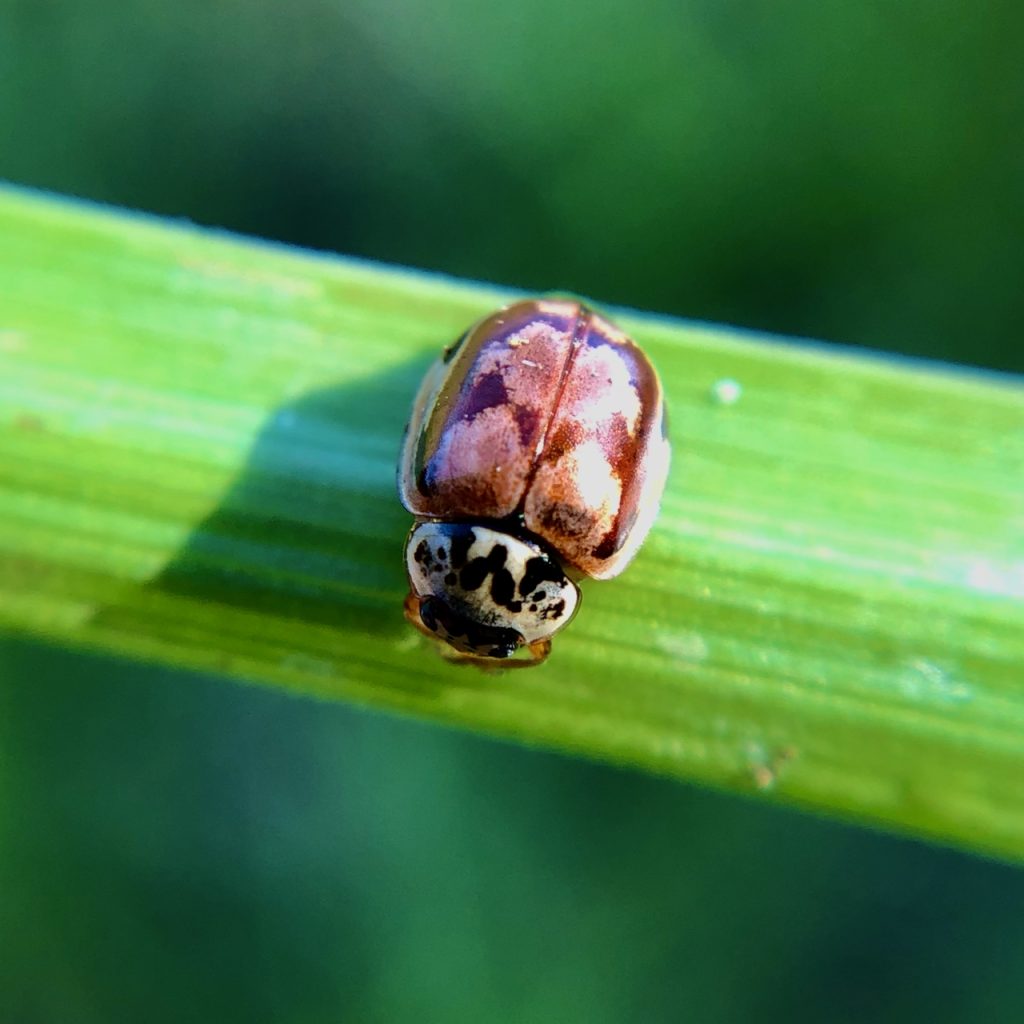
Like many lady beetles, the Painted Lady Beetle eats aphids and other small insects, both as a larva and an adult.
This species is often found near pine forests, which is the reason for another common name: the Pine Lady Beetle. As for the scientific name, I expected the genus to be a Latin word, but it’s named for the last name of an entomologist who studied them: Martial Étienne Mulsant.
Adults are visible any month of the year, but sightings on iNaturalist really kick up in April.
Stay curious!
See more of Karen’s work here.
Sources:
Info from Vermont Atlas of Life: https://val.vtecostudies.org/projects/lady-beetle-atlas/painted-lady-beetle/ Accessed 4/14/26.
BugGuide info page, with identification explained: https://www.bugguide.net/node/view/15640. Accessed 4/14/26.
All photos by Karen Richards.