
Insects copy each other all the time. They can avoid being eaten by looking like a known poisonous creature or an aggressive one. Today’s featured insect would prefer that you register it as a wasp and move on. But, shhh, it’s a beetle.
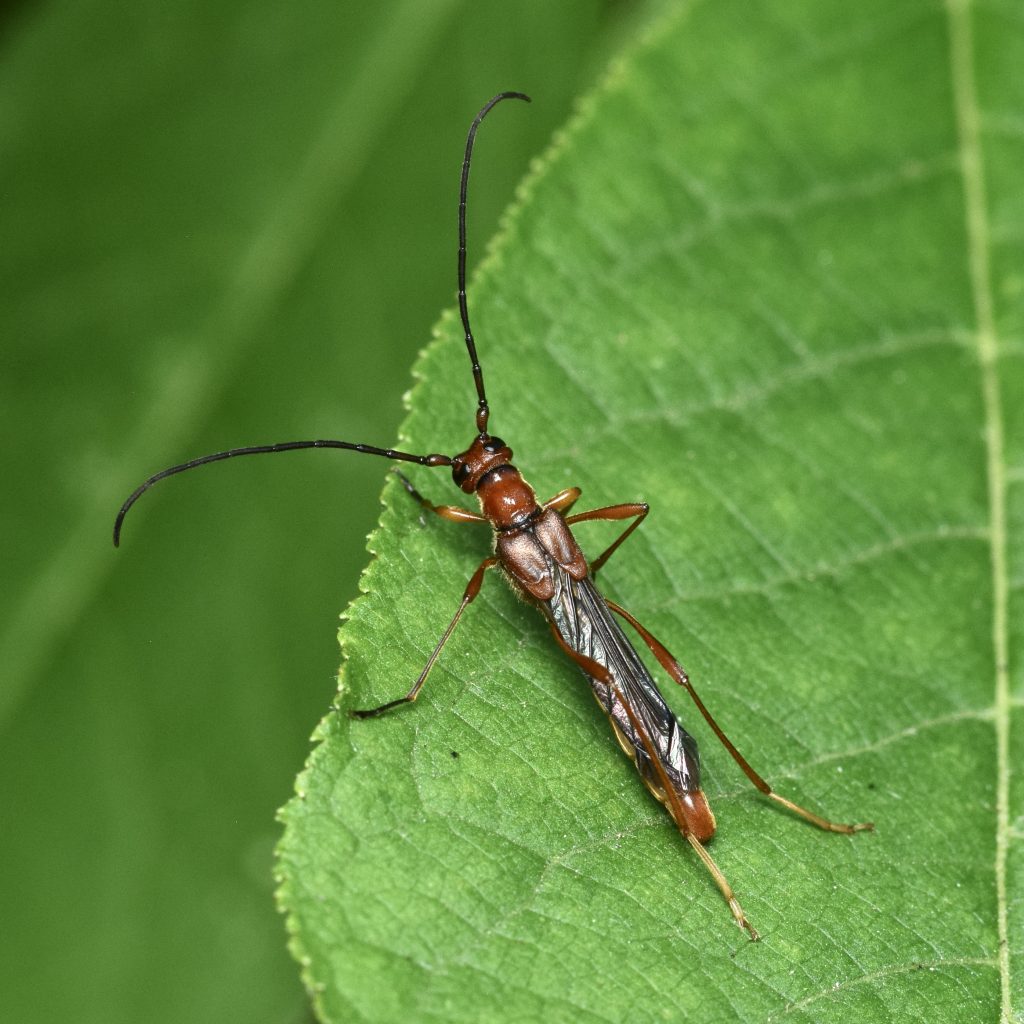
Necydalis laevicollis lives up and down the U.S. West Coast, and it has a notable connection to early entomology. Its genus was one of the first that Carl Linnaeus used to create his system of taxonomy in the mid-1700s. He established the structure of plant and animal classification and standardized a binomial, genus and species, name.
As a side note, Linnaeus also initiated the use of the symbols for male and female, which represent Mars and Venus, respectively.
Anyway, the most remarkable trait of this beetle genus is its tiny-backpack-like elytra. Normally, the hardened outer wings of beetles cover their abdomen, but in this case the coverings have been reduced to mere shoulder pads, exposing the wings and furthering the wasp disguise.
N. Laevicollis larvae eat wood from damaged trees, including oak and willow. Adults eat pollen, although the four I’ve seen have been on leaves or tree trunks. This slender longhorn beetle is likely a male, because its antennae are relatively long.
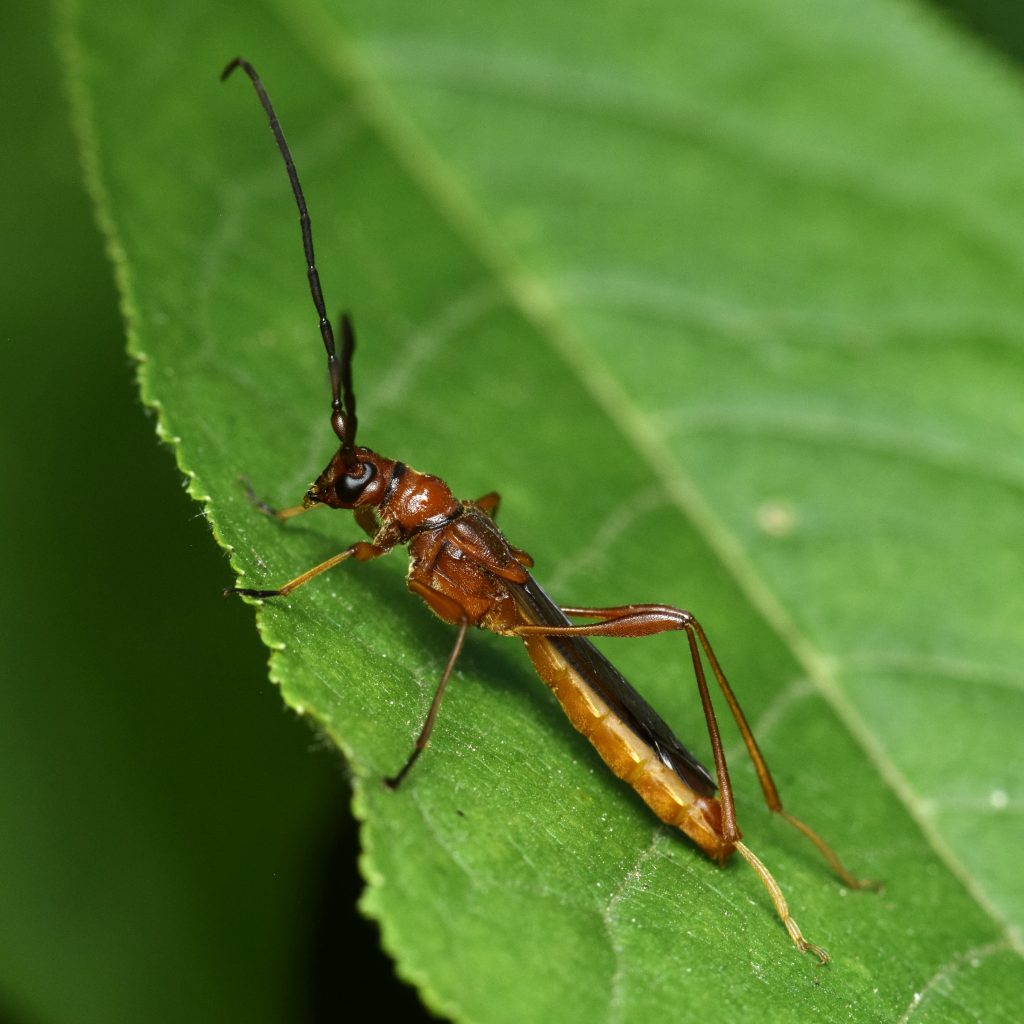
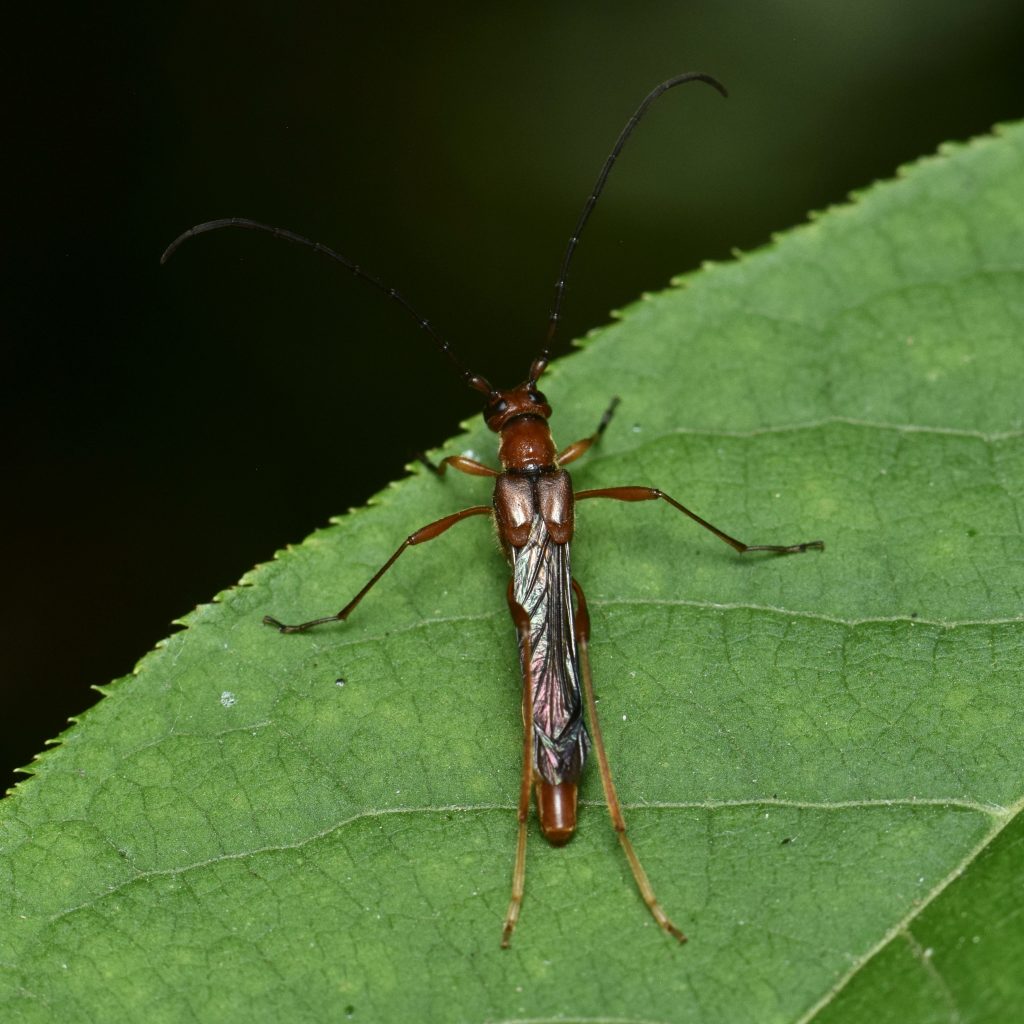
Lastly, take a look at the eyes on this beetle. Most Cerambycidae family beetles have these C-shaped eyes wrapping around their long horns. One source I found said that’s because the oversized antennae require more room for the musculature to support them.
Stay curious!
See more of Karen’s work here.
Sources:
Review of the genus from the journal Insecta Mundi: https://journals.flvc.org/mundi/article/view/138500/143700. Accessed 6/23/26.
BugGuide’s page for the genus: https://www.bugguide.net/node/view/20421. Accessed 6/23/26
All photos by Karen Richards.