
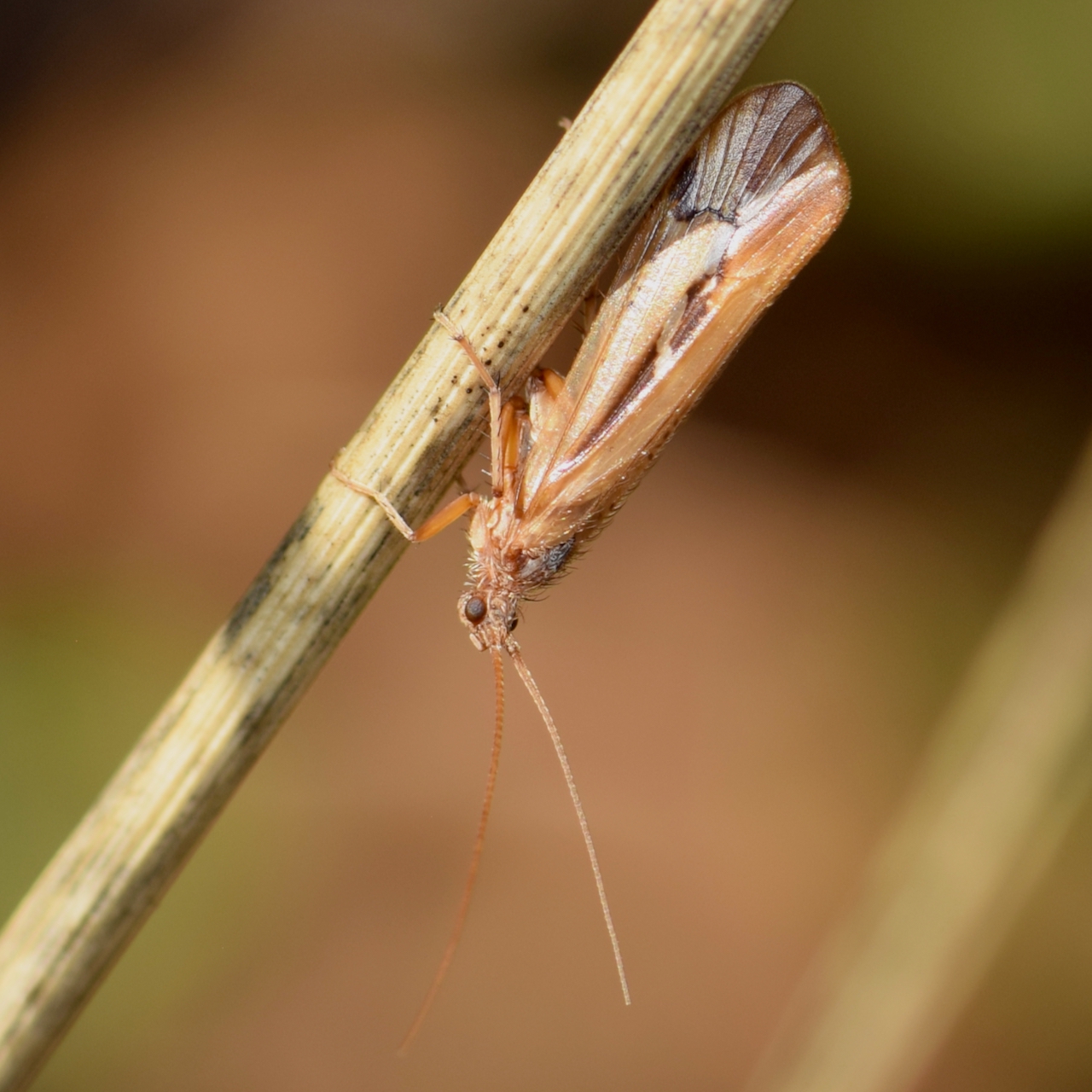
If you visit Mount Pisgah on a sunny, late-fall day, you may see what look like straw-colored moths flying here and there. But they aren’t moths, they’re Limnephilus genus Caddisflies.*
Limnephilus means “pool-loving” in Greek, and caddisflies, like stoneflies and mayflies, are aquatic creatures for most of their lives. Individuals in this genus spend a year or more underwater in their larval stage, eating bits of wood and plant tissue.
Larval caddisflies craft structures around themselves to avoid being eaten, making them look like mummy sleeping bags with a stubby head and several legs poking out. The extra armor is needed, as any fly fisher will tell you, because caddisfly larvae are catnip to trout and other fish.
They construct the cases from a variety of natural materials, including moss, snail shells, bark and sand — and they appear to have individual preferences and styles. Speaking about the cases of northern Limnephilus caddisflies, a BugGuide expert said: “Two larvae from the same pond may use totally different materials yet be collected in the same net.”
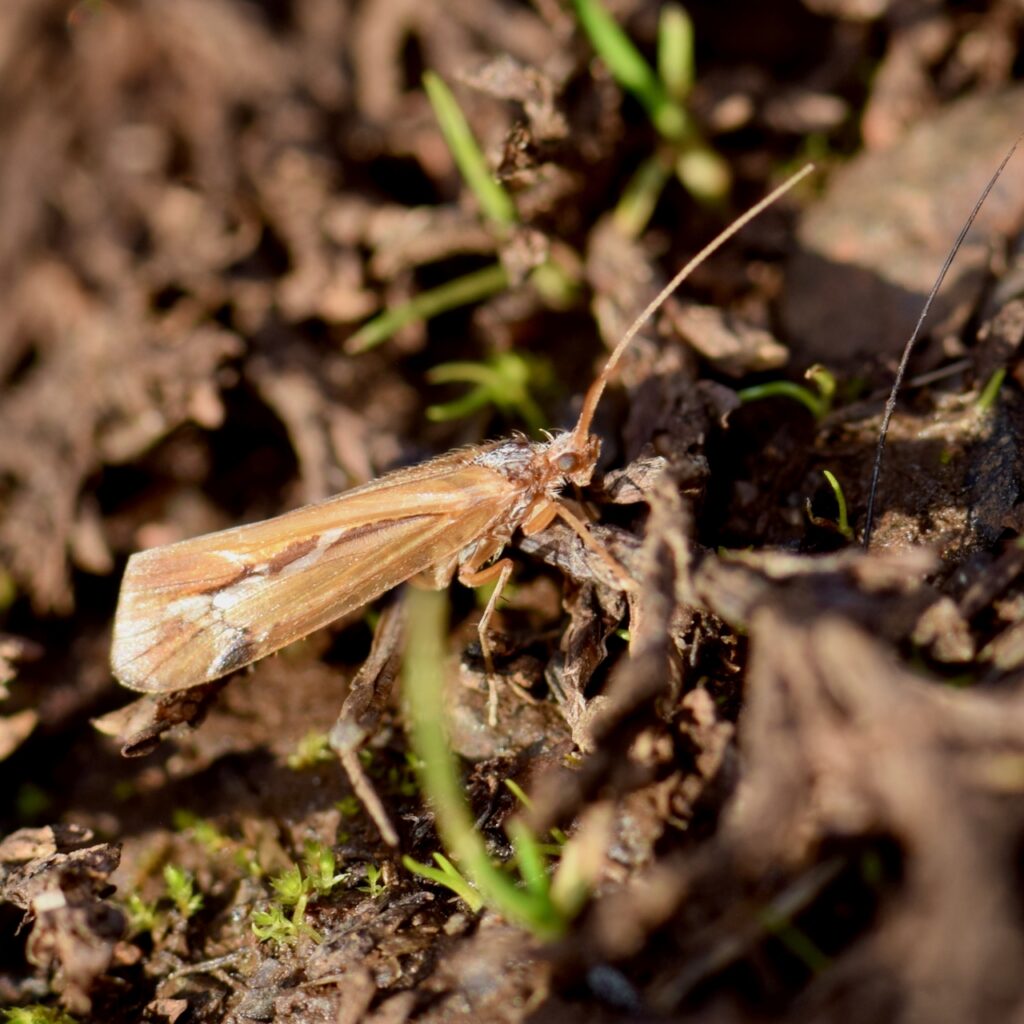
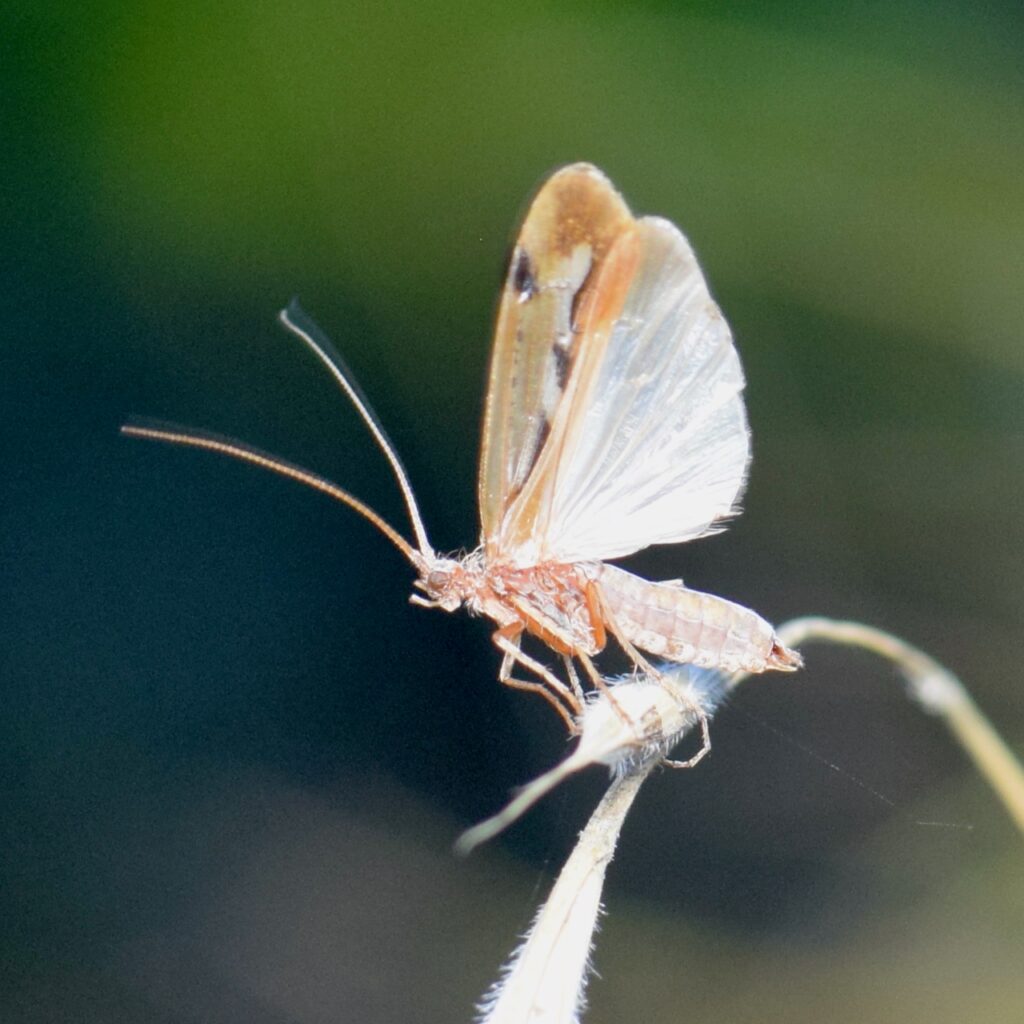
Adults live for just a few weeks. Females lay their eggs in a gelatinous mass near the water. In some species, females go through what entomologists call “ovarian diapause,” in which the eggs hold their development until late fall, when they’re ready to be deposited.
An article linked below talks about the loss of some Limnephilus species in Minnesota. The author suggests it may be because the insects’ relatively long life cycle exposes it to human-caused disturbances for a longer period of time.
Stay curious!
*There are other, darker-colored species of caddisflies on the wing this time of year as well.
See more of Karen’s work here.
Sources:
Summary from a fly fishing website: https://www.troutnut.com/hatch/2609/Caddisfly-Limnephilus-Summer-Flier-Sedges. Accessed 11/22/25.
Paper on Limnephilus decline: https://www.sciencedirect.com/topics/agricultural-and-biological-sciences/limnephilus. Accessed 11/22/25.
All photos by Karen Richards.