
Droopy, white osoberry flowers are one of spring’s first blooms, and its pollen and nectar attract many species of hungry flies, bees, and other insects. Here’s a profile of one of the more colorful and charming osoberry pollinators: The Black-tailed Bumble Bee, or Bombus melanopygus.
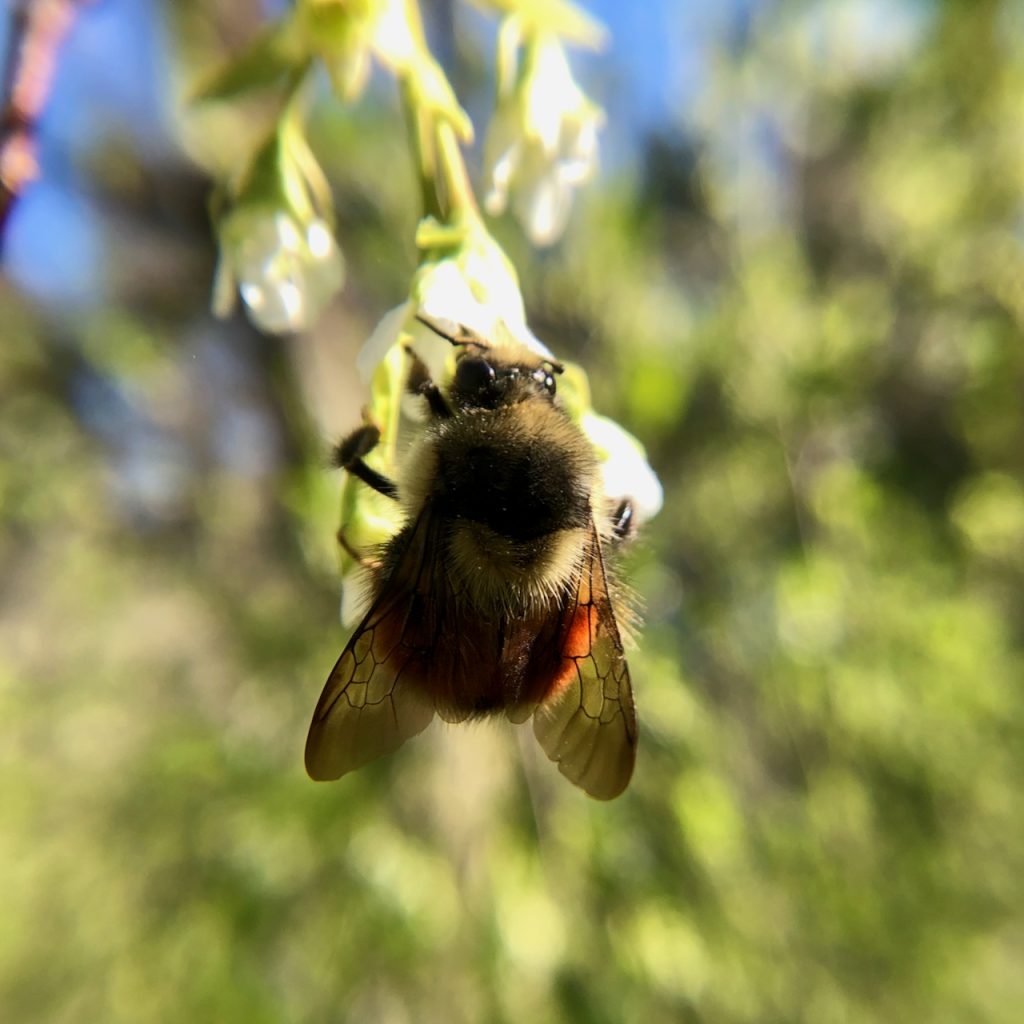
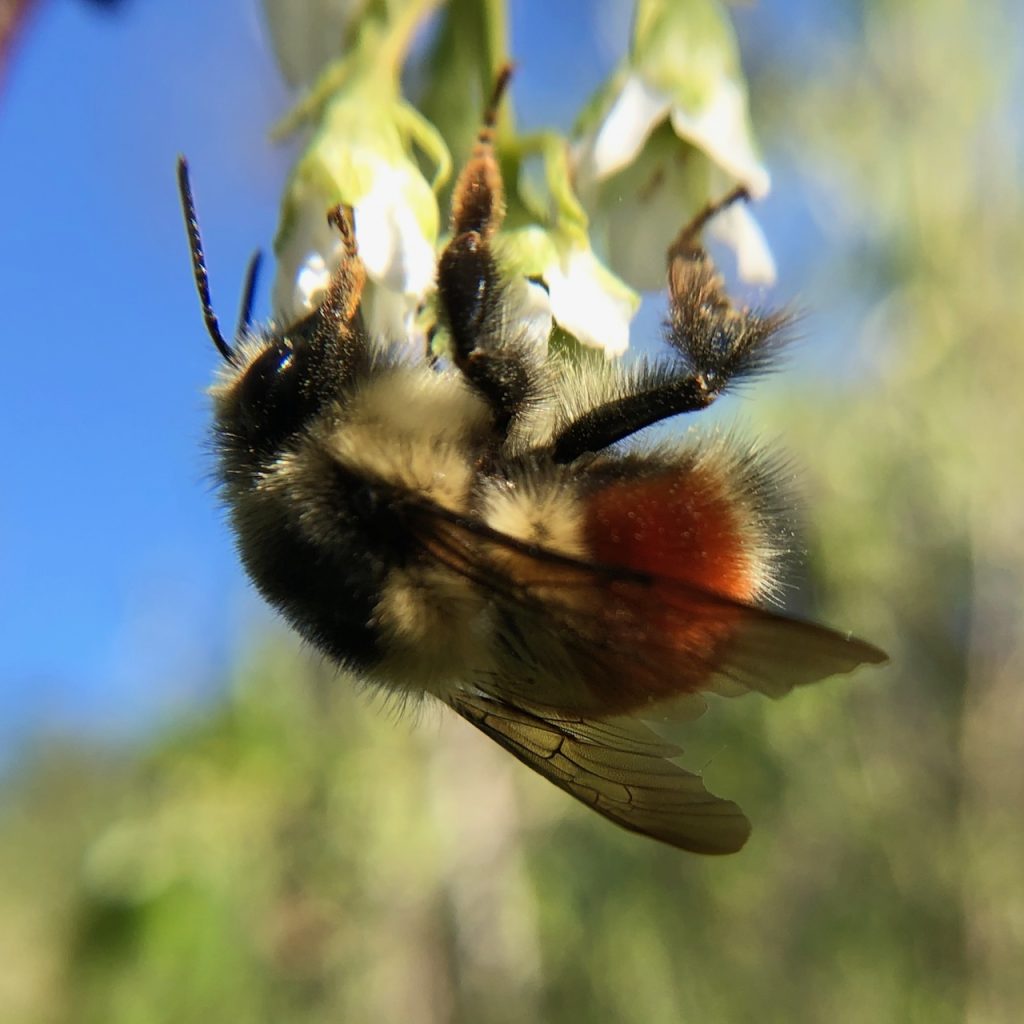
Female bumble bees that will become queens are the only bees that live through the winter. And they’re the ones that get to feast on osoberry pollen and nectar, which is only fair, given the tasks on their long to-do list.
After fueling up, B. melanopygus queens go house hunting. Like most bumble bees, they may make a bid for an abandoned rodent nest, or take a lease on a nice clump of grass, but while most bumble bees prefer underground residences, Black-tailed Bumble Bees sometimes also go for empty bird houses, mail boxes, or other man-made places that have that Goldilocks feel.
For the next couple of months, the Black-tailed Bumble Bee queen multitasks for what will become an entire colony. She goes shopping to stock the nursery, collecting pollen from a wide variety of plants, including osoberry. She forms waxen pots, fills them with pollen, and deposits eggs on them.
The resulting larvae use the pollen to grow through several larval stages, and become the first generation of female worker bees. Pollen is a superfood, by the way. Think of it as a supercharged, high-protein energy ball.
Oh, and when the queen is not outside gathering food, she keeps the larvae in the nest comfortable and safe by vibrating her flight muscles to generate the warmth they need. She’s a living heat lamp.
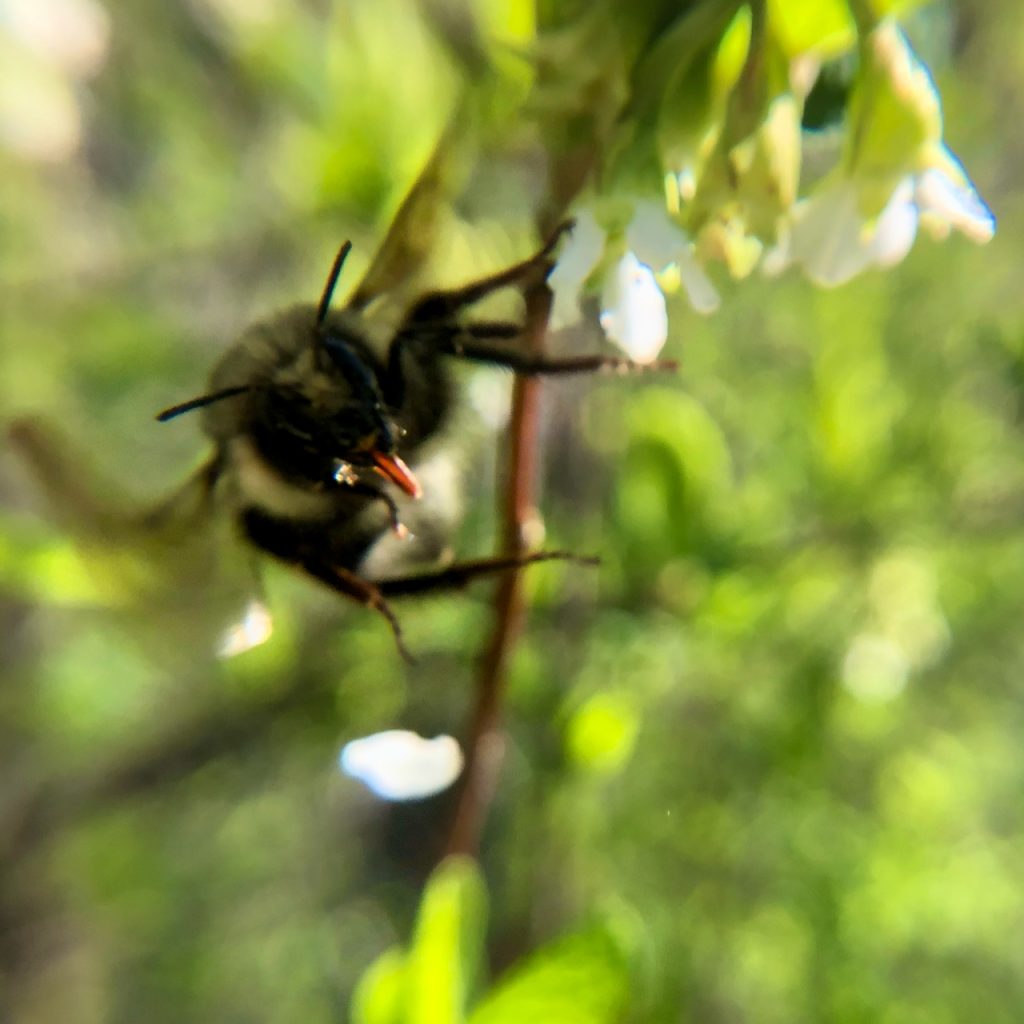
When the first generation of worker bees is able to take on foraging and nest-care duties, the queen no longer leaves the nest. Later in the summer, she lays eggs that will become males, and female gynes, which may become queens. Come fall, most bees in the nest will die, and only the newly ordained queens will live through the winter. Nests aren’t generally reused.
Although Black-tailed Bumble Bees are relatively small as bumble bees go, the queens are larger, and the orange stripe on the rump makes a pleasing pop of color in the early spring. Bombus melanopygus are visible all summer, when workers, and later males, feed on blackberry, rhododendron, and a wide menu of other flowers.
Stay curious!
See more of Karen’s work here.
Sources:
Nicely documented description of a Black-tailed Bumble Bee nest in a bird house: https://travislongcore.net/2024/10/01/a-buzz-for-the-season/. Accessed 3/30/26.
Bumblebee nesting information from the Xerces Society: https://xerces.org/bumble-bees/nesting-overwintering. Accessed 3/30/26.
All photos by Karen Richards.