
It’s wasp season, and this column’s featured guest is a gentle giant: The Great Golden Digger Wasp.
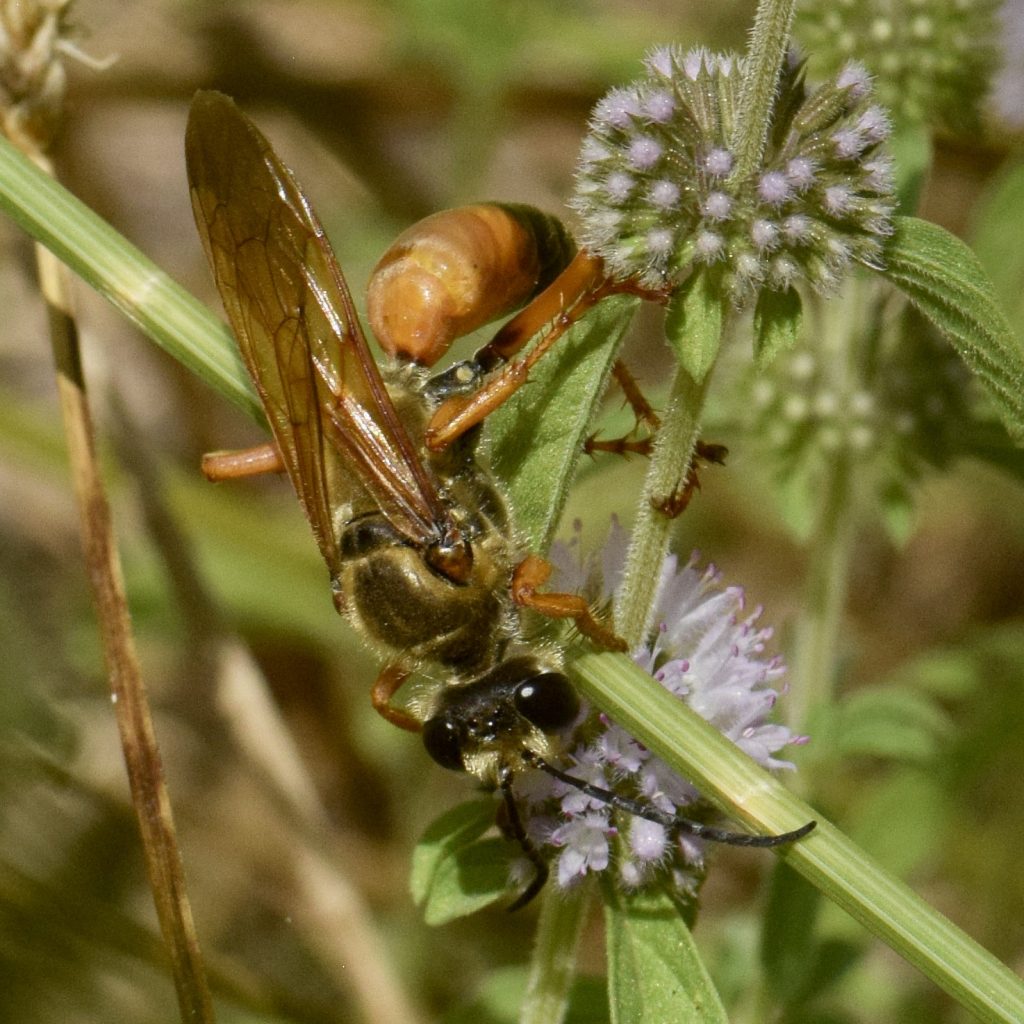
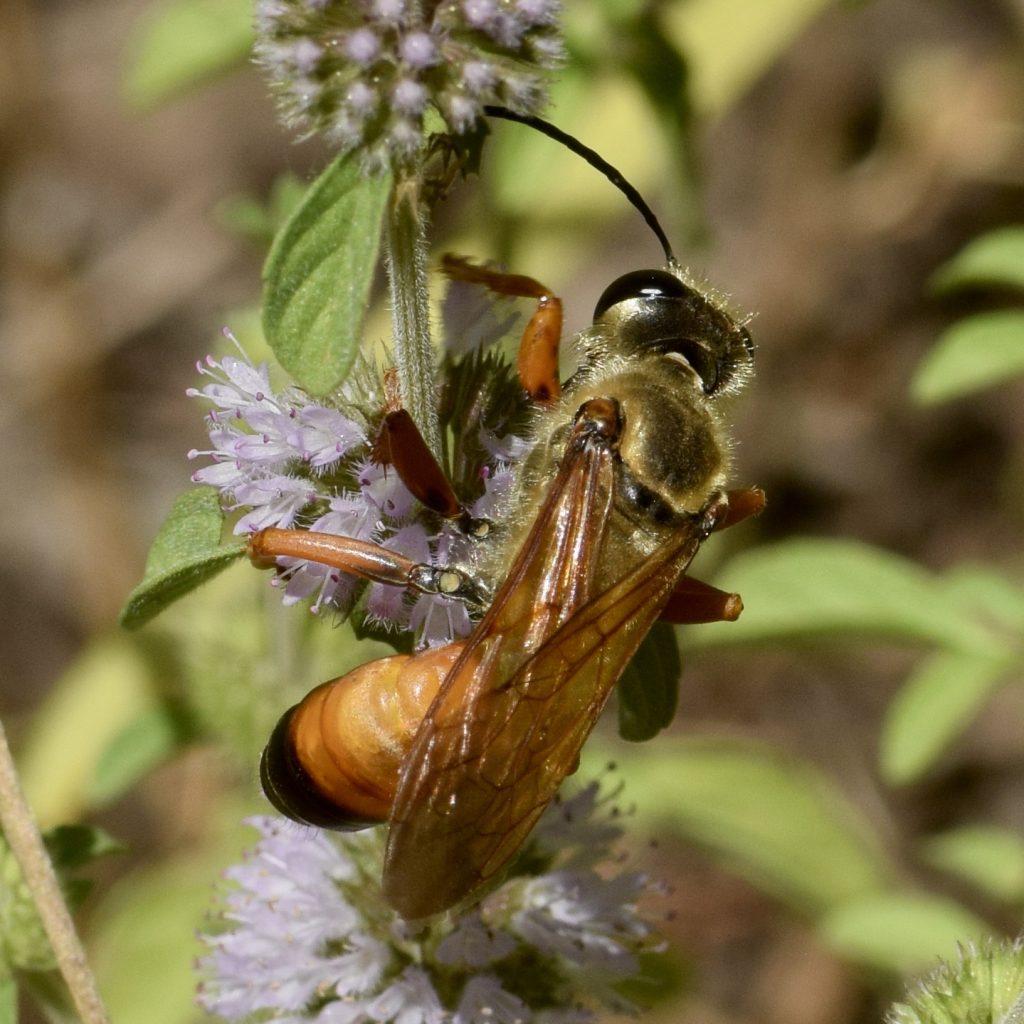
While its size might not sound large, at over an inch long this is a stout wasp, and it’s easy to follow in flight. The yellow-gold hair around its head and the red legs and red abdomen with a black tip make it distinctive. They’re found across the U.S.
Sphex ichneumoneus females excavate nests in sandy soil. They dig nearly straight down and make side chambers at right-angles to the tunnel. These chambers will become single-room nurseries for their young.
In order to feed the little ones, mama S. ichneumoneus paralyzes an insect in the Orthoptera order, usually a katydid or tree cricket, if photos from BugGuide are any indication. She uses her stinger to do this, and either flies with it or drags it back to the nest. Note: These are not aggressive wasps, in fact, they’re pestered by birds more than other wasps, perhaps because they’re so docile.
One Great Golden Digger Wasp behavior helped coin an adjective: “Sphexish” refers to a robotic series of steps that are repeated, even when it might not be necessary.
When bringing prey back to the nest, the female wasp leaves it outside, goes down into the tunnel to be sure it’s clear, then grabs the prey by its antennae and drags it in. If a meddlesome researcher moves the prey during her inspection, the wasp will see that it’s not right, reposition it, and repeat the nest inspection. She’ll do this over and over again if the prey is moved every time.
Once the tunnels are clear and the prey is in position, she drags the still-living insect into a chamber, lays an egg on its thorax, and seals it up. She’ll repeat this behavior for each egg, covering the tunnel entrance between each visit. One female may build up to six nests, each with up to seven eggs.
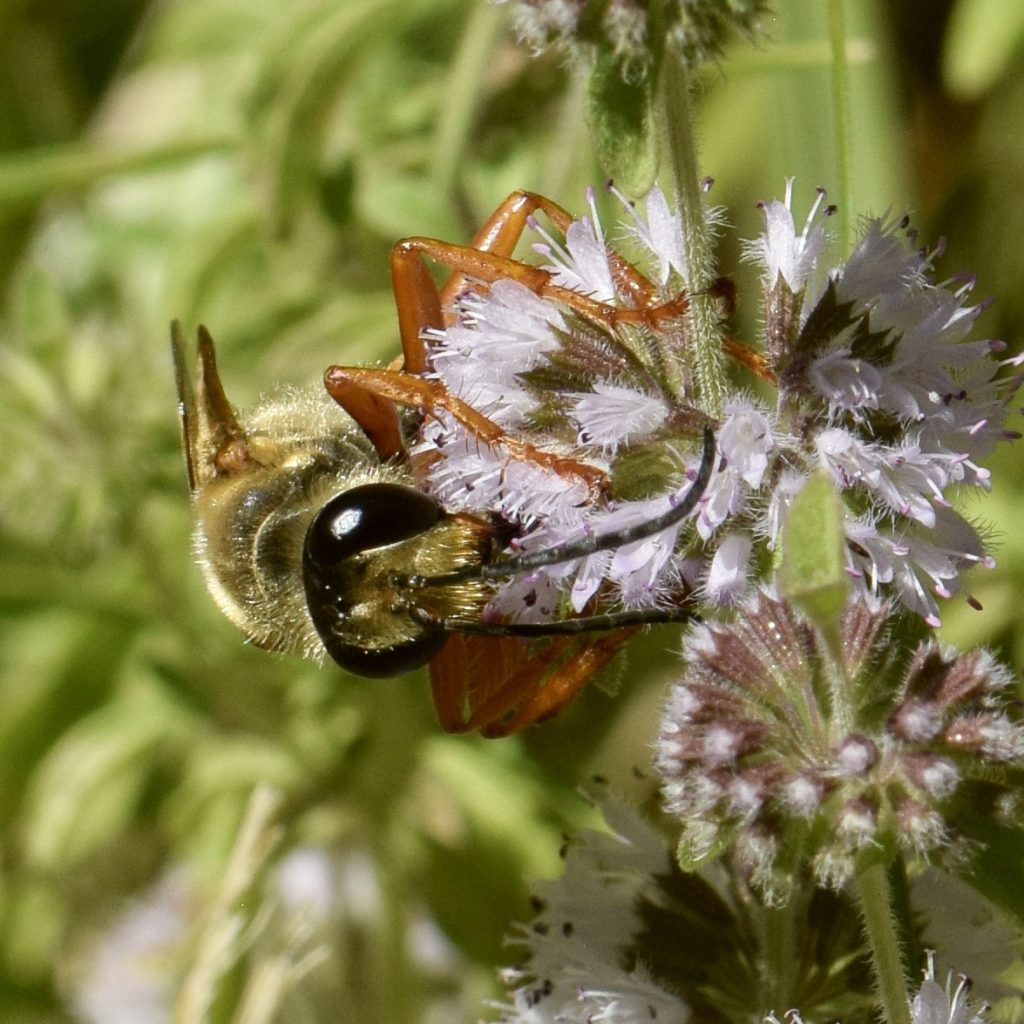
Adult Great Golden Digger Wasps don’t eat other insects, they drink nectar. That’s why you’ll often see them on flowers this time of year. Pennyroyal seems to be a favorite at Mount Pisgah.
Stay curious!
See more of Karen’s work here.
Sources:
Article on the wasp from Deschutes County: https://www.deschuteslandtrust.org/news/blog/2024-blog-posts/great-golden-digger-wasp Accessed 7/29/26.
Info from the Missouri Department of Conservation: https://mdc.mo.gov/blogs/discover-nature-notes/great-golden-digger-wasps-scary-good. Accessed 7/29/26.
All photos by Karen Richards.