
From its dull, orange color and small size, you might assume the Common Ringlet is a moth. But moths and butterflies don’t always follow those rules, and this is, in fact, a butterfly.
Here’s a more reliable rule: Butterflies have knobs on the end of their antennae, while moths have various comb, feather or other non-matchstick shapes.
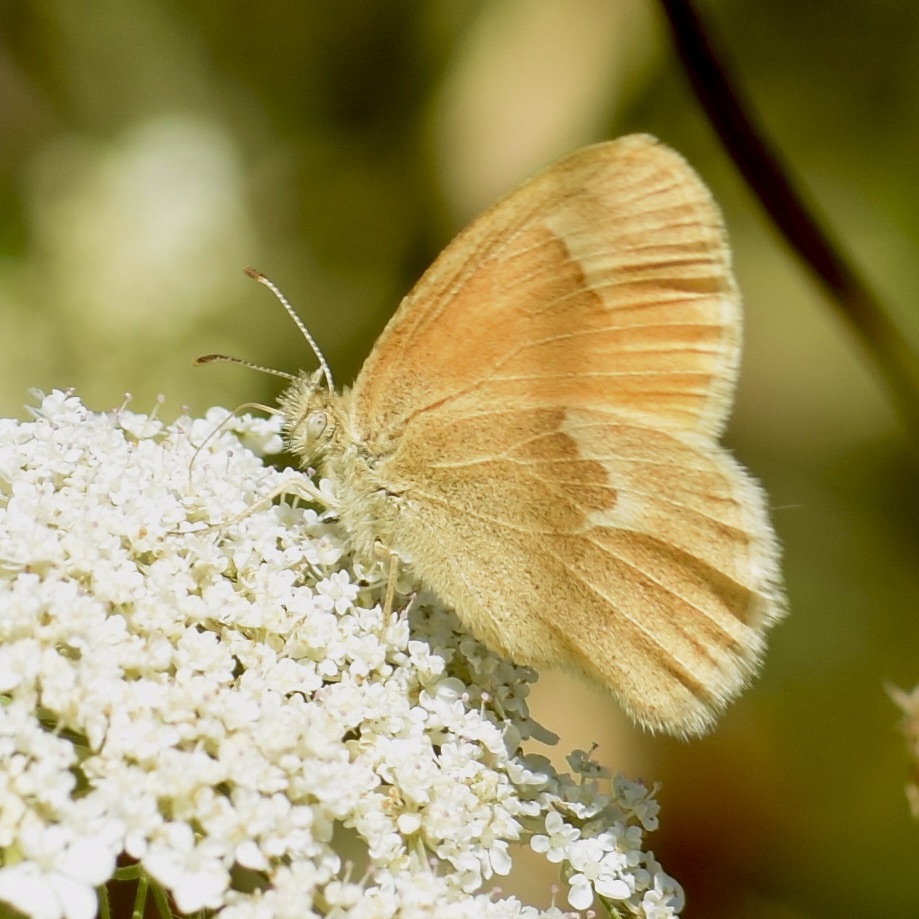
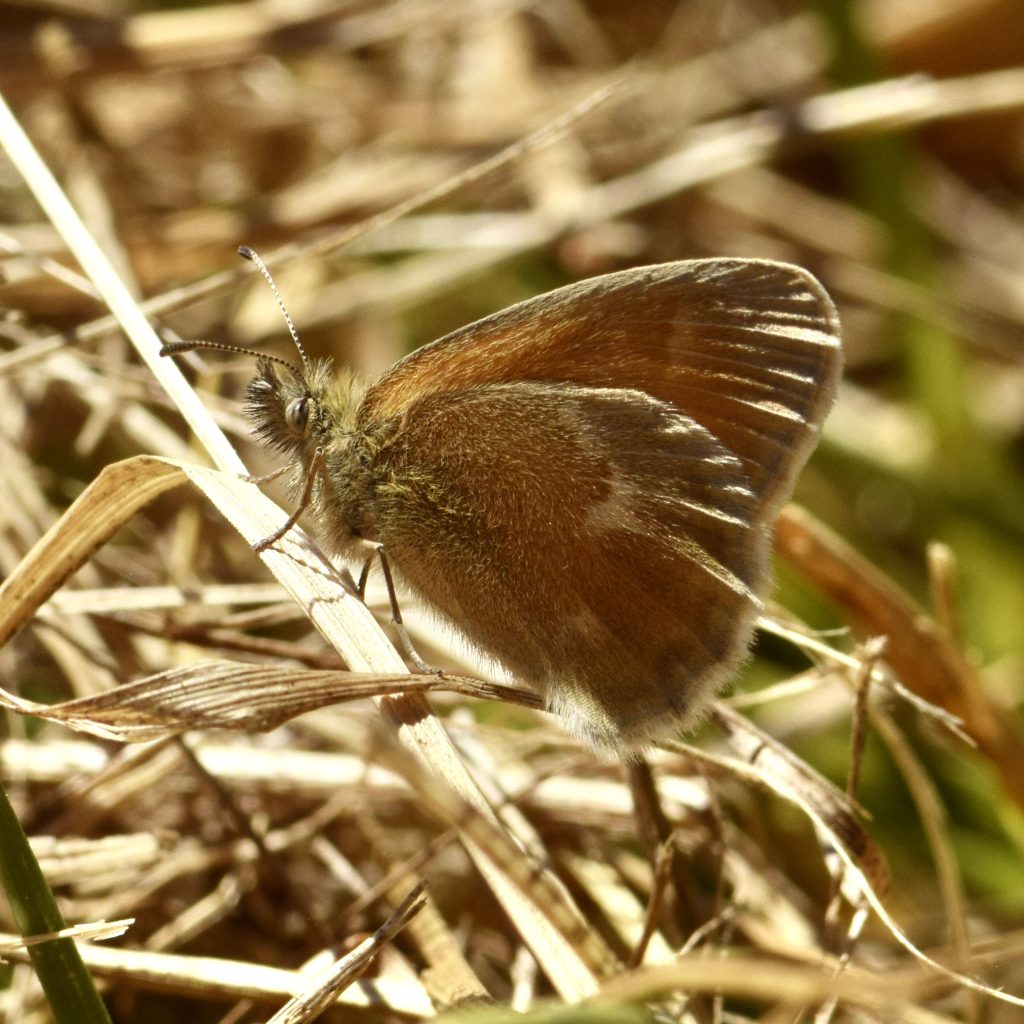
The common ringlet, known scientifically as Coenonympha california, can be light gray to tan to deep orange. And it has wide variations in not only the wing color, but pattern as well.
Most of them have a dark round circle or eyespot on the upper outside wing, and some have more. It’s why the word “ring” is in the common name. However, the C. california in our area don’t have eyespots, and they tend toward straw colors.
Common Ringlets lay their eggs on dead grass, and I often see them in the dry, grassy meadows of the South Bottomlands in late summer. The resulting caterpillars also come in different colors, from olive to tan to green, with dark and light stripes.
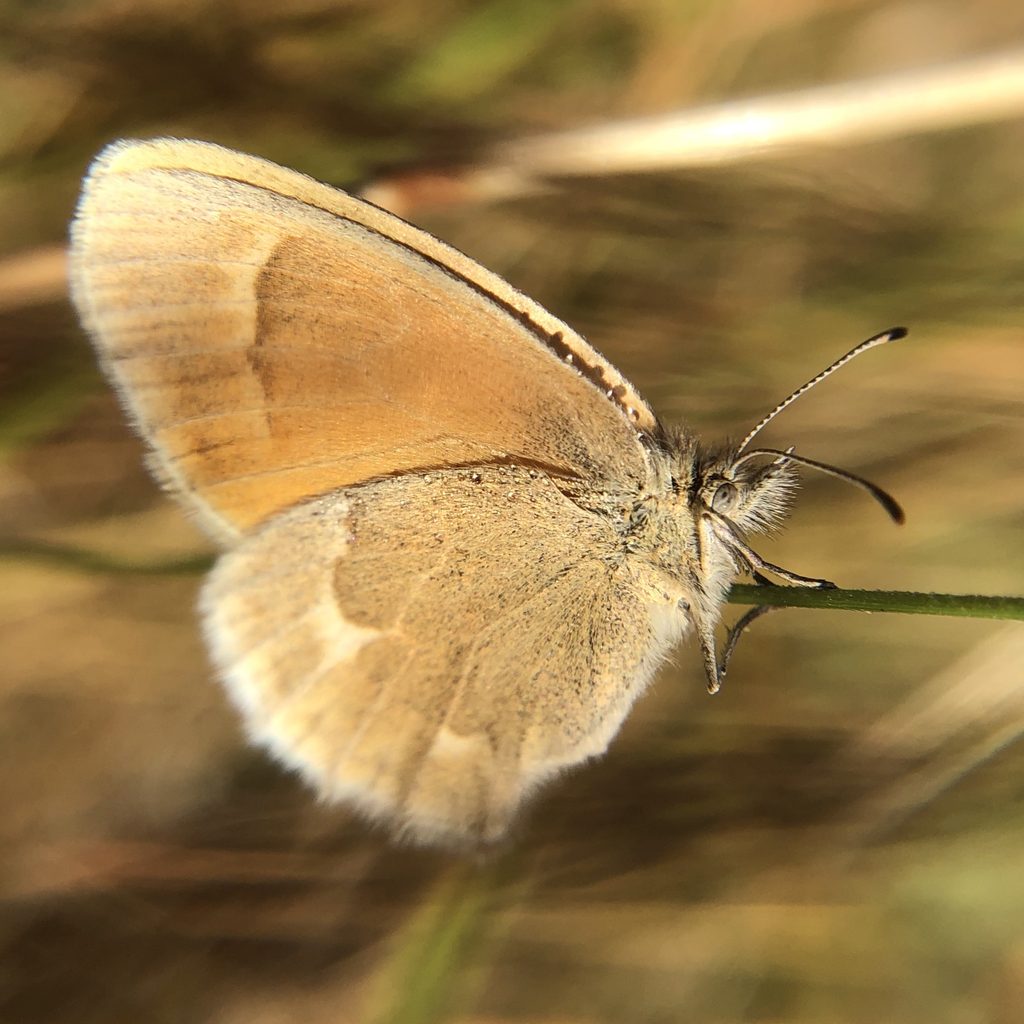
Over the years, it has seemed to me the ringlet is shy about showing off its inner wings. To do a quick fact check, I looked at photos of the species on iNaturalist. Sure enough: Of about 100 images of Common Ringlets that I scrolled through, only two had open wings.
Take a closer look at some Common Ringlets if you get a chance. Do some Mount Pisgah-area individuals have spots? Can you find one with open wings?
Stay curious!
See more of Karen’s work here.
Sources:
Photos of C. California from iNaturalist (note that the ones with bright green and red on their upper wing were marked as part of a research project): https://www.inaturalist.org/
Info on the species from Montana Field Guide: https://fieldguide.mt.gov/