
If settling in to read a thriller or murder mystery sounds good these days, here’s some information to complement that vibe: The story of a wildly successful, real-life killer: the Leafhopper Assassin Bug.
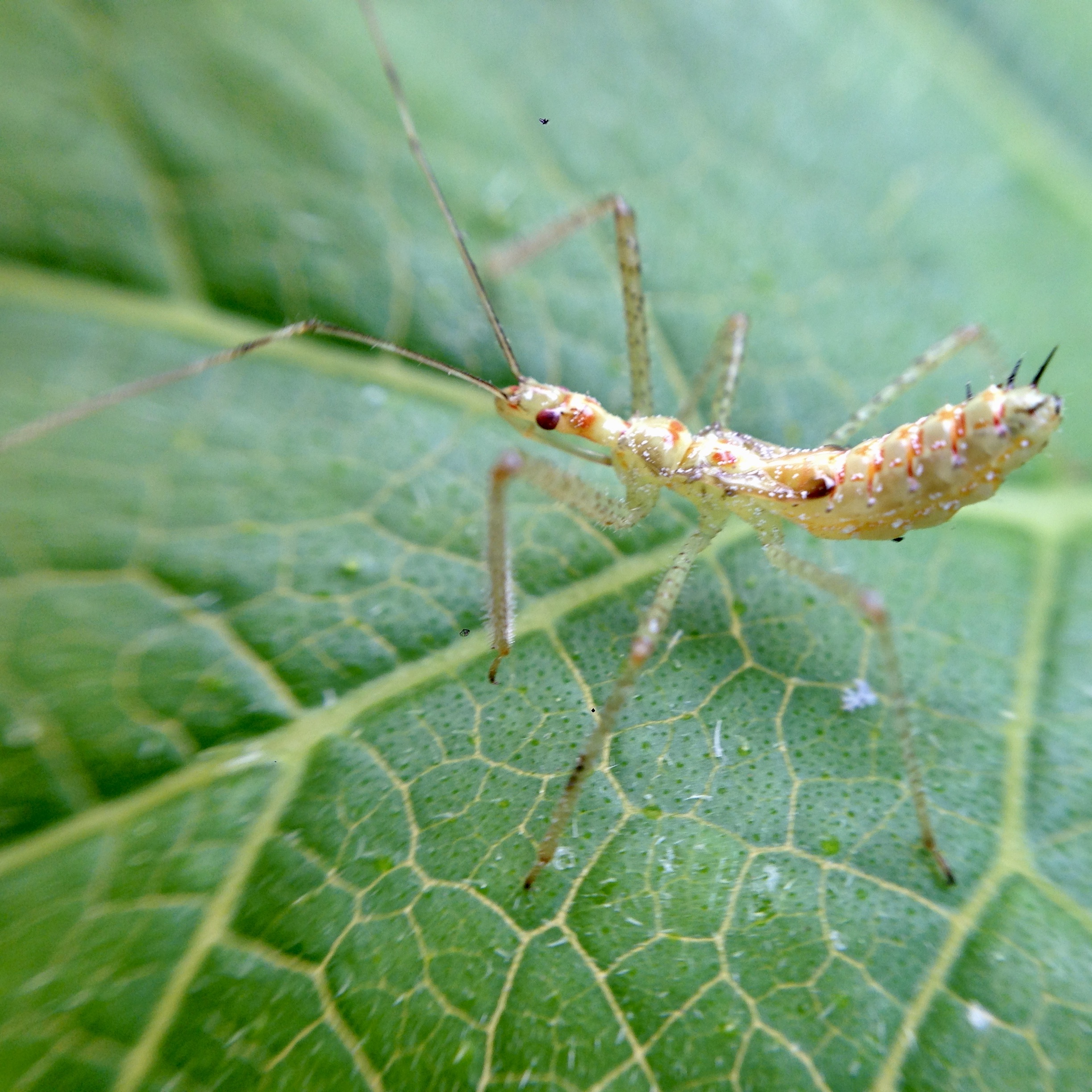
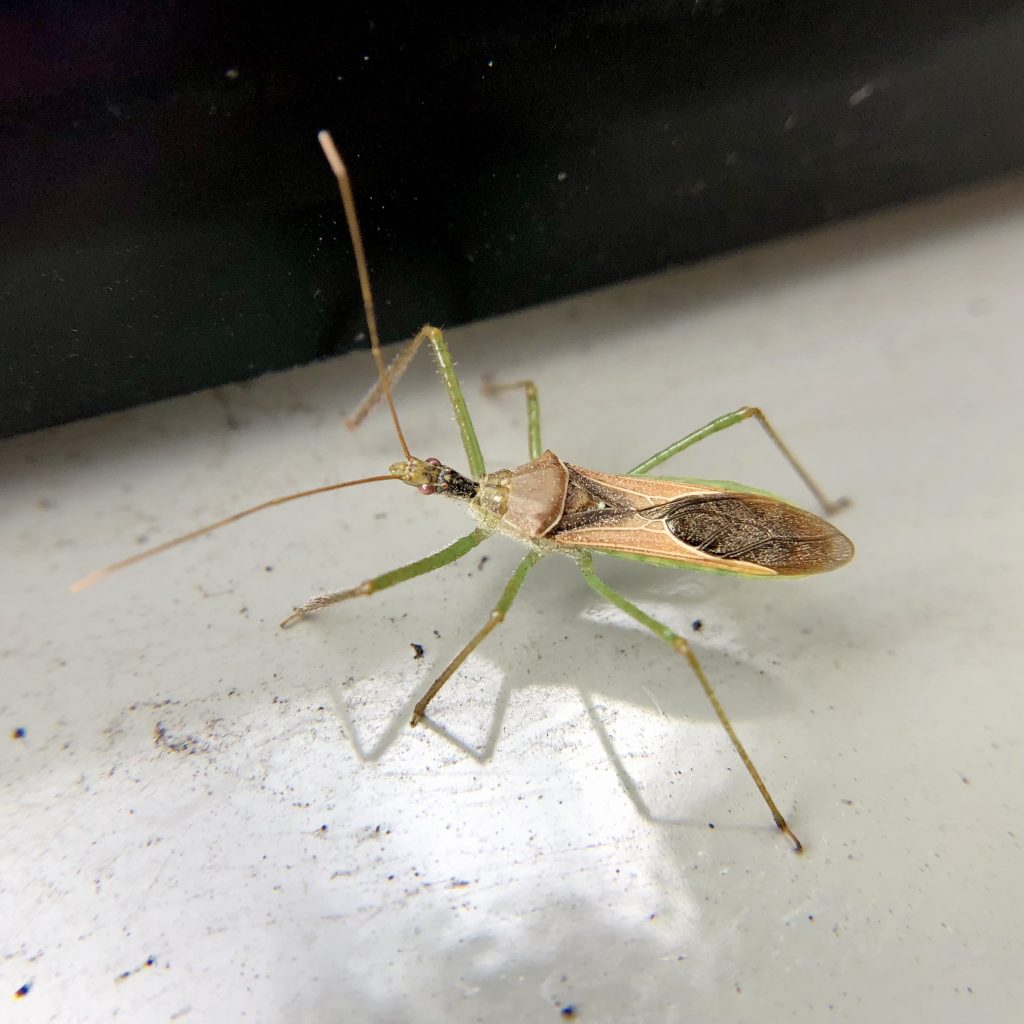
Zelus renardii, like most other “true” bugs in the Hemiptera order, lives through the winter as an adult. For that reason, you may even find one inside this time of year. But don’t worry—this tiny sword-bearer isn’t coming for you or your pets. Its built-in weapon is designed to spear other insects.
Not only that, but the sharp-pointed rostrum, which folds under its head when not in use, is a syringe-like dispenser of chemicals that pre-digest the insides of its prey. The assassin bug can target animals larger than itself, make the innards into a soup, then drink the nutrient-rich fluids through its hollow rostrum. It’s like carrying around a mini blender and straw wherever you go.
This assassin bug uses one more weapon besides the rostrum: an anatomical super-glue. Older nymphs and adults are able to create their own sticky substance (that’s the actual phrase that appears in scientific papers). But the youngest assassins get help from their mom, who coats her egg mass with a gooey secretion.
Recently-hatched nymphs use the egg mass goo on their first and second sets of legs to secure their prey to themselves. As seen in the study linked below, the substance has proven to help them be more successful hunters.
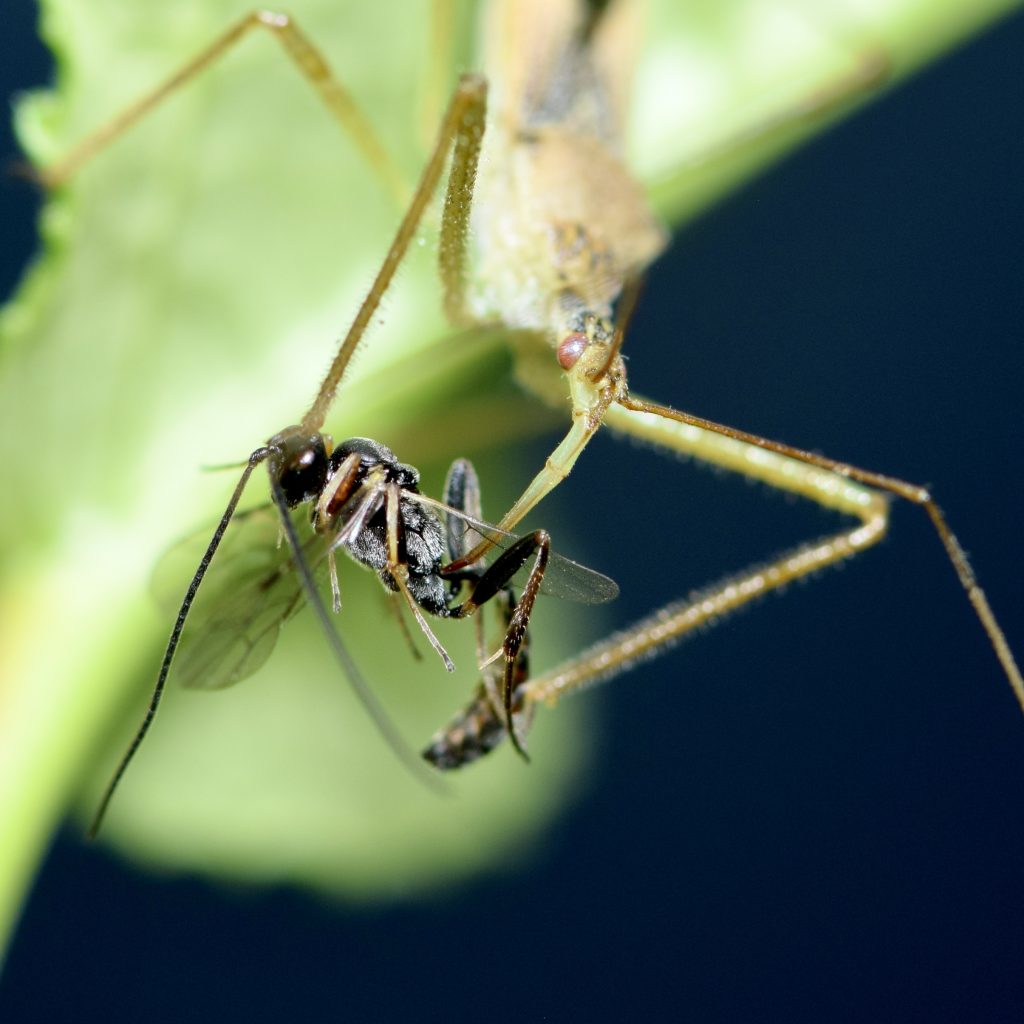
The final reason for this assassin’s success is its adaptability. For one, it’s not just leafhoppers on the menu. I’ve seen Z. renardii eating lady beetles and wasps, and they’re known to also feed on other bugs, moths, cockroaches, and more. The insects are adaptable to different environments as well. Females lay eggs on all types of flowering and non-flowering plants.
In general, Leafhopper Assassin Bugs are viewed as beneficial, because they help reduce pest insects on crops and plants that humans care about. However, because of their broad diet, they also eat insects that are themselves beneficial, including lacewings.
Stay curious!
See more of Karen’s work here.
Sources:
Paper that reveals how sticky goo on Z. renardii egg masses help newly-hatched nymphs to hunt: https://academic.oup.com/aesa/
Facts from the California Species Project: https://californiaspecies.com/animals/zelus-renardii. Accessed 11/4/26.
All photos by Karen Richards.