
Here’s a wasp smaller than the tip of your pinky finger that has the power to manipulate oak trees.
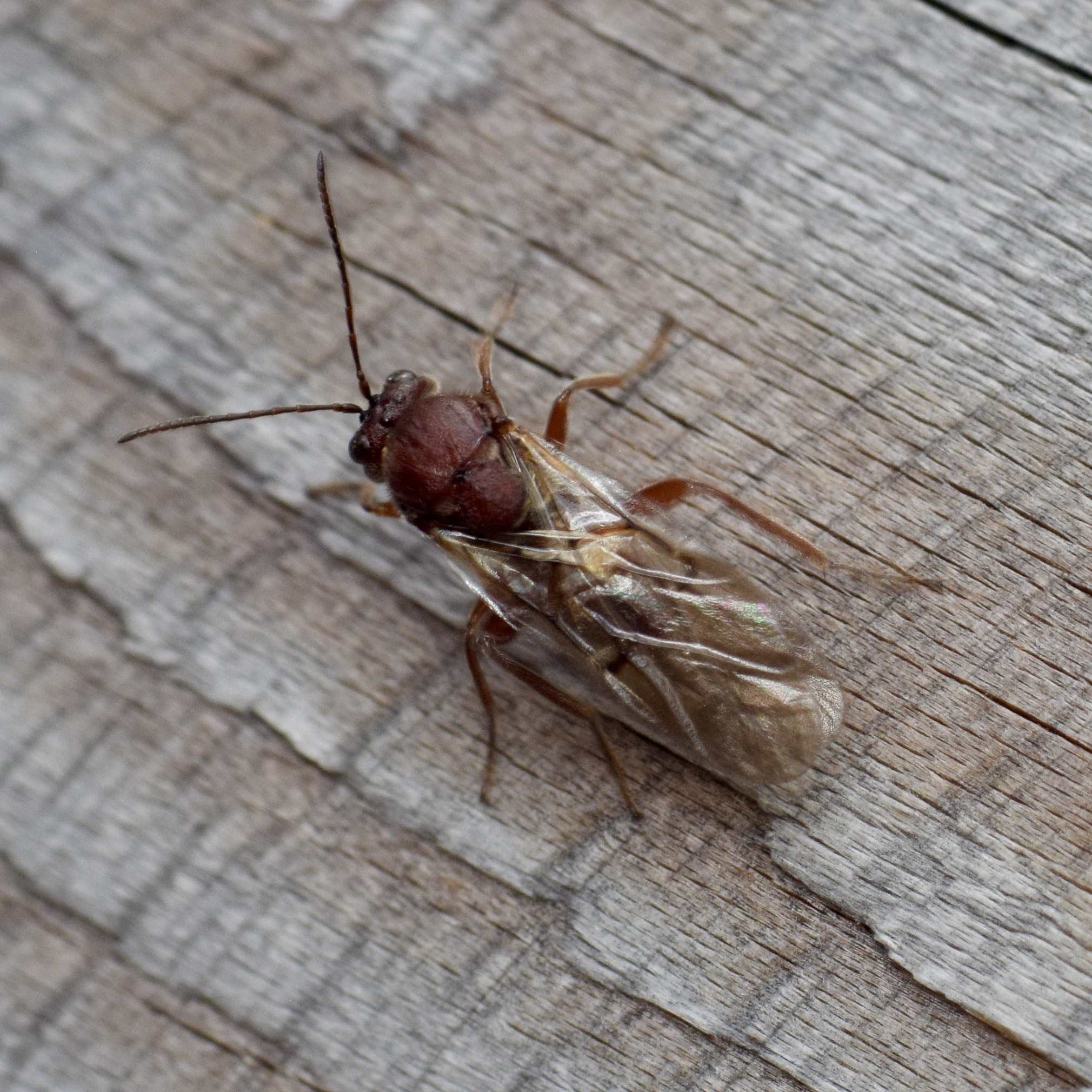
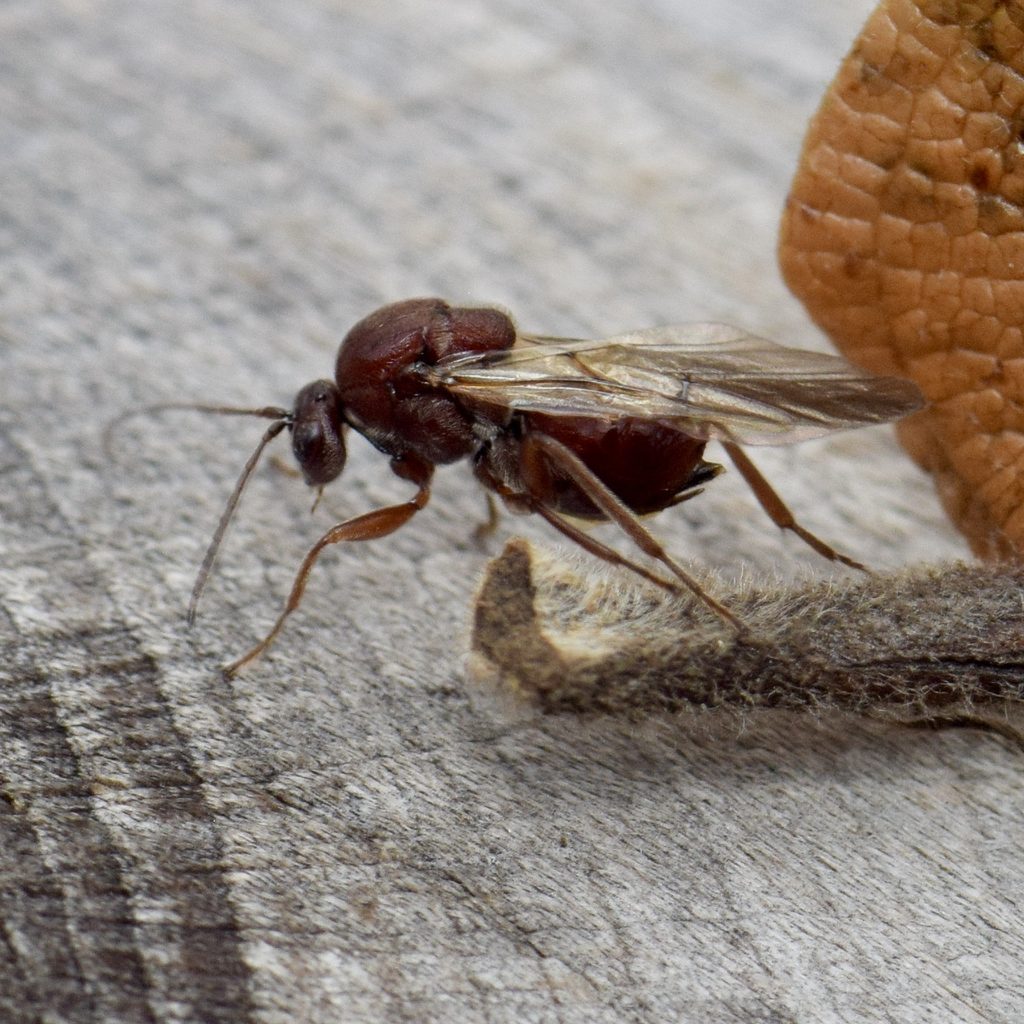
You may not have seen the wasp before, but you’ve seen what it can do. This is the California Gall Wasp, and its larvae trigger white oak trees to make apple-sized, -colored, and -shaped growths on the limbs. These are aptly known as apple galls. The galls turn tan to brown in late summer and may still be on the trees when the leaves fall.
We can be confident this is a female wasp because no males have ever been found. That said, researchers are looking at DNA to see whether the species, Andricus quercuscalifornicus, has males in some generations, in addition to being able to reproduce parthenogenetically.
At just five millimeters long, this wasp is tiny, but it’s one of the largest species in its family of gall-forming wasps.
Females lay eggs in the fall under the bark of a young oak branch. No one knows exactly how the larvae, which emerge in the spring, signal the tree to create the relatively giant gall. But we do know that the chamber provides food and shelter for more than just the California Gall Wasp: It attracts 20-plus other species to live there, according to the study linked below, creating its own mini ecosystem.
When the gall is being formed, the outer layer is soft and other insects are able to enter or lay eggs. Some of them are parasitoids, including several wasps that use the gall wasp larvae as food. Others are more like roommates, technically called “inquilines,” such as the moths or beetles that use the gall tissue as food and the space as a safe retreat. The galls also benefit birds and fungus eaters.
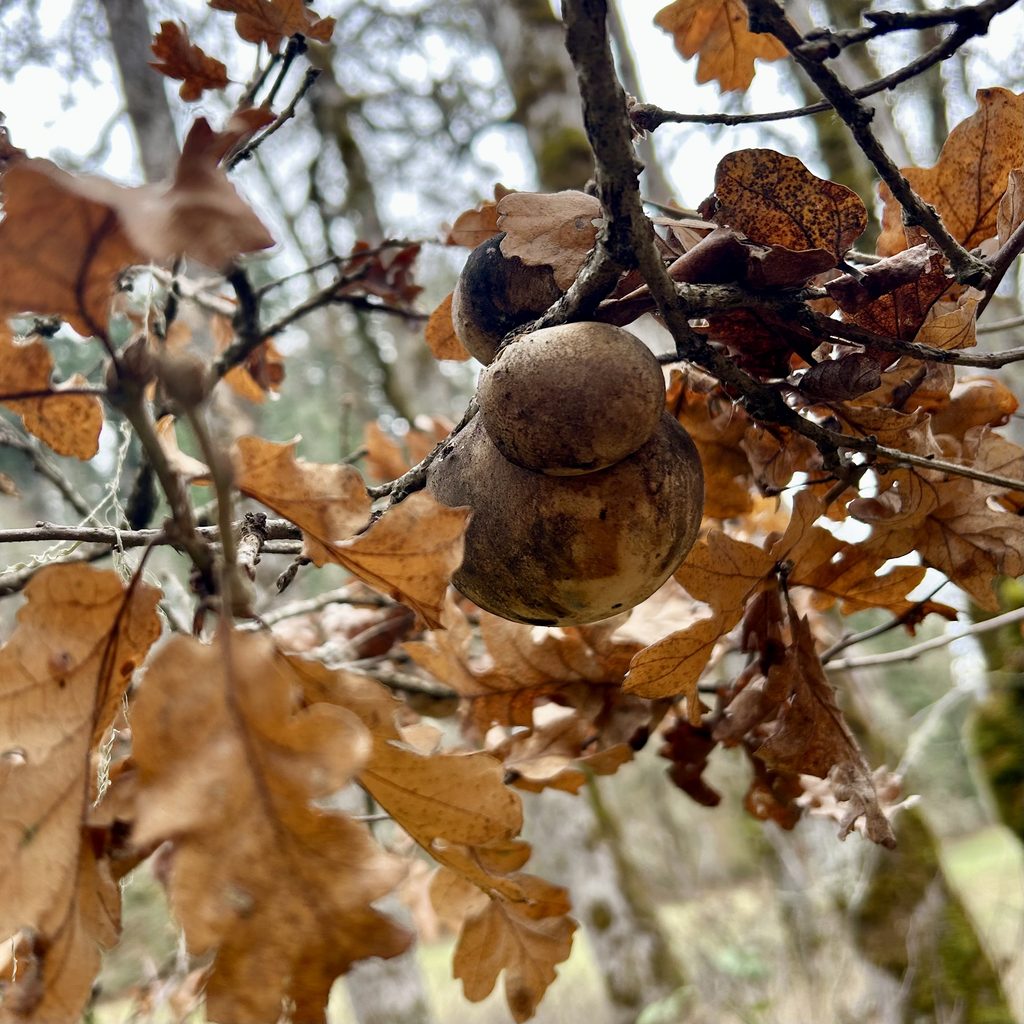
In the fall, California Gall Wasps emerge from their pupae, bore holes out through the gall, and fly off to lay eggs for the following year. I spotted this one on the bridge near the Jette trail in mid-November, which is late but not unheard of for the species.
Note: The galls don’t injure the oak trees or shorten their lives, though they can make them look lumpy.
Stay curious!
See more of Karen’s work here.
Sources:
The UC Davis group that is looking for male California Gall Wasps: https://caes.ucdavis.edu/news/
Research paper discussing the other species associated with California Gall Wasp galls: https://link.springer.com/
All photos by Karen Richards.